


Vulnerability scanning is automated broad discovery; penetration testing is human-led validation of exploitability. Run scans continuously across your estate, and commission a penetration test to validate your most critical assets or after major changes. Used together and iteratively, the two methods cover both breadth and depth far better than either does alone.
TL;DR:
- Continuous vulnerability scans should be combined with periodic penetration tests on high-risk assets to ensure both broad and in-depth security coverage.
- Credentialed scans provide a deeper internal view, but both scan types can generate false positives and must be supplemented by expert validation.
- Penetration tests actively demonstrate exploitation possibilities and should be scheduled after major system changes or before compliance deadlines.
- An iterative cycle of scanning, remediating, and validating enhances security effectiveness and aligns with best practices like NIST SP 800-115.
- Managed cybersecurity services can improve response times to findings, but testing requires explicit authorization and clear scope to remain legal and effective.
Table of Contents
- What is vulnerability scanning?
- What is penetration testing?
- Key differences at a glance: purpose, scope, effort and cadence
- When to choose a scan, when to commission a pen test
- Combine scanning and testing in an iterative cycle
- Practitioner perspective: common traps and practical priorities
- How a managed cybersecurity partner keeps you ahead of findings
- FAQ
- Sources
What is vulnerability scanning?
Vulnerability scanning uses automated tools to check your systems, applications and networks against known weaknesses. These tools compare what they find against databases of known CVEs, flag missing patches, misconfigured settings and open ports, and produce a prioritised list of issues to fix.
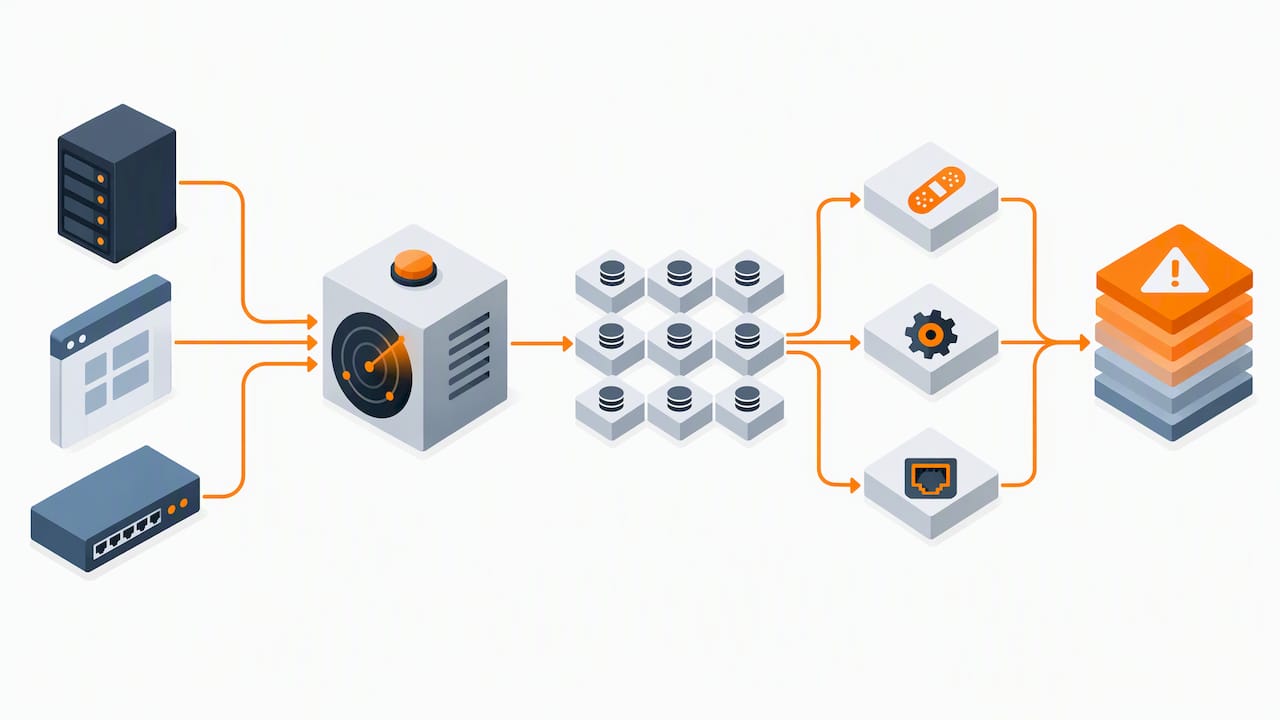
Scans come in two flavours. A non-credentialed scan looks at your systems from the outside, much like an opportunistic attacker would. A credentialed scan logs in with valid access, giving a far more accurate picture of what is actually exposed, at the cost of needing careful access management. Most teams run both at different intervals, using credentialed scans for depth and non-credentialed scans to see what an outsider sees.
Within a vulnerability management process, scanning plays the role of a smoke detector: it gives continuous visibility and an early warning rather than a definitive verdict. According to NIST’s guidance on information security testing, scanning provides targets and visibility, while other techniques are needed to confirm whether a flaw can actually be exploited.
- Scans check for known CVEs, outdated software, weak configurations and open ports.
- Credentialed scans see more but need controlled access; non-credentialed scans mimic an outsider’s view.
- Results feed a prioritised backlog rather than standing alone as proof of risk.
Scanners can also generate false positives, and their databases need frequent updates to stay useful, according to NIST’s legacy testing publication. That means a scan report is a starting point for investigation, not a finished diagnosis.
What is penetration testing?
Penetration testing puts a skilled person in the attacker’s seat. Rather than matching signatures against a database, a tester actively tries to break in, move around, and demonstrate what damage a real compromise would cause. It follows a structured sequence, and each phase builds on the last.
- Reconnaissance: the tester maps your systems, applications and entry points.
- Exploitation: they attempt to actively exploit weaknesses rather than just flag them.
- Lateral movement: once inside, they test how far an attacker could reach, such as into other network segments or sensitive data stores.
- Reporting: findings are translated into business impact, with proof-of-concept evidence and specific remediation steps.
Tests are scoped differently depending on what you need answered. External and internal network tests, web application and API tests, social engineering exercises, and broader red team engagements each target a different part of your attack surface. As TechTarget’s comparison of the two methods explains, this human-led approach is what lets a test show what an attacker could actually achieve, not just what might theoretically be wrong.
Most organisations commission a test on a regular schedule, after significant system changes, or ahead of compliance deadlines.
Pro Tip: Ask for a debrief call alongside the written report. A good tester will explain which findings matter most to your business, not just which ones scored highest.
Key differences at a glance: purpose, scope, effort and cadence
Scanning and testing answer different questions, and conflating them leads to a false sense of security on one side or wasted budget on the other.
- Purpose: scanning discovers known weaknesses at scale; testing validates whether a weakness can actually be exploited and what it would cost you.
- Scope and depth: scans sweep broadly across many assets quickly; tests go deep on a defined target, often over days or weeks.
- Resourcing: scans run largely unattended once configured; tests need skilled, briefed testers and a clear scope agreement before work starts.
- Output: scans produce a list of flagged issues ranked by severity; tests produce proof-of-concept exploits, business impact narratives and targeted remediation advice.
- Cadence and compliance: under PCI DSS v4.0, external vulnerability scans must be run at least quarterly by a PCI SSC Approved Scanning Vendor, while penetration testing is a separate annual requirement, or triggered after significant changes, for organisations within that scope.
How you treat the findings differs too. A scan result tells you where to look, and it belongs in a remediation queue ranked by CVSS score and business context. A test result tells you what actually happened when someone tried to break in, and it belongs in front of the people who own the affected system, because it usually demands immediate attention. Treating a high scanner score as confirmed risk, without validating it, is one of the more common mistakes we see teams make.
When to choose a scan, when to commission a pen test
Picking the right tool for the moment saves both money and worry. A short decision framework helps.
- Run scans continuously for everyday exposure management, especially after frequent changes such as new deployments or patch cycles.
- Commission a pen test for high-risk assets: payment systems, customer data stores, or anything handling sensitive information.
- Test network segmentation whenever you restructure your network, to confirm that boundaries actually hold under attack.
- Target business-logic abuse cases with manual testing, since these are rarely caught by signature-based tools, as the OWASP Web Security Testing Guide notes.
A practical budgeting heuristic follows a clear order: scan first, prioritise findings by CVSS score and business impact, remediate, then commission a penetration test to confirm the fix actually holds. Typical triggers for a test include a major application release, a change to your payment card scope, or a network segmentation change.
Pro Tip: Before scheduling a pen test, pull your most recent scan results together. It narrows the tester’s starting point and often reduces the time, and cost, of the engagement.
Combine scanning and testing in an iterative cycle
The strongest approach treats scanning and testing as stages in one ongoing cycle rather than separate projects. NIST SP 800-115 recommends exactly this: scan broadly, remediate what you find, then use targeted testing to confirm the fixes hold against a real attempt.
- Scan on a regular schedule, triage results, remediate by priority, then validate the fix with focused testing.
- Give your testers asset lists, recent scan output, known mitigations and a clear rules-of-engagement document before they start.
- Agree scheduling windows, a rollback plan and named escalation contacts if testing touches production systems.
This handoff matters more than it sounds. A tester working from a current scan and asset inventory spends less time rediscovering what you already know, and more time proving what actually matters.
Practitioner perspective: common traps and practical priorities
A critical label on a scan report is a flag, not a verdict. It is tempting to treat a high CVSS score as proof that attackers will walk straight in, but scanners narrow the field; they do not prove exploitability. Penetration tests exist to close that gap, confirming business impact and pointing to fixes that matter rather than ones that merely look urgent on a dashboard. Our practical suggestion is to align your assessment cadence with release cycles and compliance deadlines, and to assign clear ownership for remediation before the next scan lands, not after.
— Will
How a managed cybersecurity partner keeps you ahead of findings
Scanning and testing only create value when findings get acted on quickly, and that is where many teams fall behind. Our remote monitoring and management service watches your systems continuously, so issues surfaced by a scan get picked up and triaged sooner rather than sitting in a queue. For ongoing automated attack surfaces, including bot-driven abuse of web applications, SemLocal’s work on SaaS bot defence is a useful read alongside your own testing programme.

We cannot replace the specialist skills a penetration test requires, and we would not try to. What we offer instead is the groundwork: our care plans keep patching, configuration and remediation on track between tests, so when a tester does arrive, they are validating a well-maintained environment rather than chasing basic hygiene issues. If you would like help building that foundation, our managed IT support and cybersecurity services are a good place to start.
FAQ
What’s the difference between CVE and CVSS?
A CVE is a unique identifier for a specific publicly known vulnerability, while CVSS is a scoring system that rates how severe that vulnerability is. Security teams use CVSS scores, sourced from databases such as the National Vulnerability Database, to prioritise which CVEs to remediate first.
Are DAST and penetration testing the same?
No. Dynamic application security testing (DAST) is an automated scanning technique that probes a running application for known weaknesses, whereas penetration testing is human-led and attempts to actively exploit what it finds. DAST often feeds useful starting points into a penetration test rather than replacing it.
What are the two main types of vulnerability scans?
The two main types are credentialed scans, which log in with valid access for a deeper view of internal weaknesses, and non-credentialed scans, which assess systems from the outside without access. Many organisations run both to balance depth against an outsider’s perspective.
Is penetration testing illegal?
Penetration testing is legal when it is carried out with explicit written authorisation from the system owner, defining scope and rules of engagement beforehand, as PCI SSC’s penetration testing guidance sets out. Testing a system without that authorisation, even with good intentions, can constitute an offence.


